my birthday wish

Some of you have made music with me over the years. You know what being in the room with me is like. Since my birthday is coming up, I’m hoping you’ll take a moment to hear what I’m asking for.

This past year, I decided to start something new. I wanted to nurture spaces that are explicitly neurodiversity-affirming. I wanted to make music that reflects the histories and cultures of the communities I’m in—not a fixed repertoire, but a living one. I wanted more instruments, wider age ranges, and a room that doesn’t sort people by developmental milestone or tax bracket. I wanted people to be able to attend as often as they like without paying more.

And I wanted to charge less than it costs to run the program, on purpose, knowing I’d be fundraising constantly to fill the gap. For years I taught in programs I couldn’t have afforded myself. That felt like a problem worth solving.

Enter imeetswe. We’re in our first year, and this is our Spring fundraising appeal. It would be a bait-and-switch to offer sliding scale classes and then only appeal at fundraising time to folks that are enrolled, so I’m reaching out to you. If any of this resonates—as a donor, a sharer, or just someone who wants to know more—I’d love for you to take a look, and share widely. Thank you!

a living wage: a guide for artists and gig workers in the bay area

What Are You Charging?

Three conversations happen regularly in our community.

A colleague texts: “what are you charging for lessons?”

Another sends an email: “a school offered me this schedule and this salary—is that reasonable?”

A third says, in person, something harder to articulate: “I feel like I need to charge more for a private gig, but I don’t know how to explain why.”

These are not three different questions. They are the same conversation, framed in different contexts—and the reason it keeps coming up is that most of us learned to price our work by looking sideways at what others were charging, or by accepting what we were offered, rather than starting from what we actually need to live.

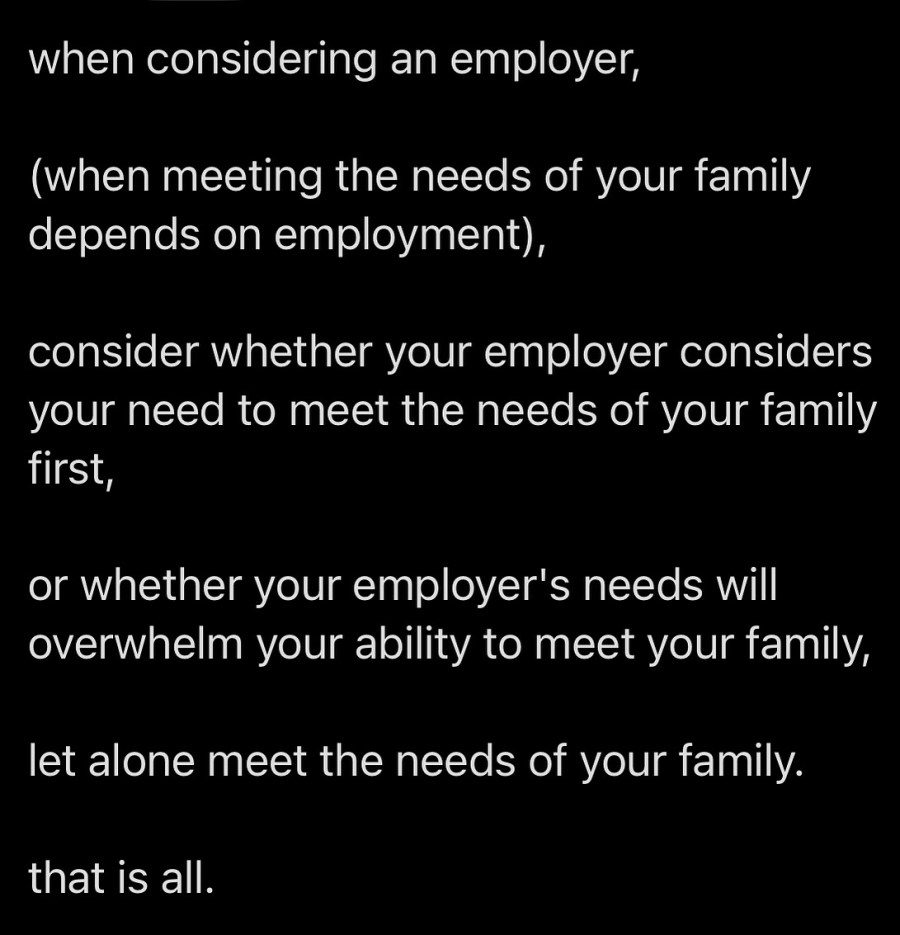
Our starting point needs to be what an artist (or other part-time gig workers) needs to live—not what any particular institution, context, or tradition has decided an artist’s time is worth.

Start with the number

A living wage in the Bay Area—meaning housing, food, transportation, healthcare, and modest participation in ordinary life—runs roughly $100,000 per year for a single adult. That number will be uncomfortable for some. Sit with the discomfort for a moment before moving on, because the discomfort itself is information.

The numbers bear this out. A one-bedroom apartment in Oakland or Berkeley—the most affordable corners of the inner East Bay—currently runs between $2,000 and $2,300 per month, with Berkeley averaging around $2,270 and Oakland around $1,980 for a one-bedroom. That is before utilities, renters insurance, or the reality that many working artists need a dedicated space for practice or instrument storage that a standard one-bedroom does not accommodate. In San Francisco proper, a one-bedroom averages $3,790—a number that effectively removes the city from consideration for an artist building a career from scratch.

Food for a single adult cooking most meals runs $450 to $600 per month in groceries, with monthly grocery bills for a single adult ranging from $400 to $600 depending on shopping habits and dietary preferences—and that figure assumes discipline and time, two things a fractured freelance schedule does not reliably provide. Add modest dining out and the occasional meal grabbed between gigs, and a realistic food budget lands closer to $650.

Healthcare is where the arithmetic becomes genuinely alarming for independent workers. The enhanced federal subsidies that had made Covered California plans affordable for freelancers expired at the end of 2025 and were not renewed. For those earning above 400% of the federal poverty level—roughly $58,320 for a single adult—the full unsubsidized premium now applies, which in many Bay Area metro plans exceeds $700 to $900 per month for a single adult on a mid-tier plan. An artist earning $100,000 gross is above that threshold. Health insurance alone, at the lower end of that range, costs $8,400 per year before a single co-pay or prescription.

Transportation compounds everything. An artist who carries instruments—a cello, a keyboard, percussion equipment, a sound system—cannot reliably depend on BART and a bicycle. A car means insurance, registration, gas, and maintenance: conservatively $400 to $500 per month. Going car-free is possible, but transit gaps are real—and the rideshare charges that fill them have a way of arriving all at once, on the weeks you can least afford them.

Then there is the tax structure of self-employment itself. A freelance artist earning $100,000 gross pays self-employment tax of approximately $14,130—the employer and employee share of Social Security and Medicare combined—before federal and California income taxes. Total tax liability at that income level runs roughly $30,000 to $34,000 annually depending on deductions. Take-home is closer to $66,000 to $70,000.

Run the budget: $2,200 rent, $650 food, $800 healthcare, $450 transportation, $200 utilities and phone, $150 in professional expenses—instrument maintenance, strings, reeds, music, scores—and $25 in renters insurance. That is $4,475 per month, or $53,700 per year, before a dollar of savings, before an emergency, before a plane ticket to see family, before anything goes wrong. At $66,000 take-home, what remains is $12,300—just over $1,000 per month—for everything else a life requires.

$100,000 gross is not wealth in the Bay Area. It is the arithmetic floor of a life that does not require choosing between healthcare and rent.

We are going to work backward from $100,000.

A sustainable working year for an artist looks something like this: forty working weeks, thirty hours of paid work per week. That is 1,200 billable hours annually—not the hours you spend preparing, maintaining your instruments, traveling between gigs, managing your schedule, or recovering from an intensive week. Just the hours a client is present and paying.

$100,000 divided by 1,200 hours is $83.33.

We’ll call it $85. The extra $1.67 per hour is not generosity—it is a small buffer against the gap between a clean calculation and a life that does not run on clean calculations. Instruments need repair. Gigs fall through. A student cancels the week you needed them not to. The $85 baseline assumes that a working artist’s year will be, in some measure, imperfect—and builds that assumption into the rate rather than leaving the artist to absorb it after the fact.

That is your baseline hourly rate. Not your asking price for everything—as we will see, some work warrants more—but the floor below which a straight hourly arrangement stops supporting a dignified life.

Not all hours are equal

Here is what the baseline assumes: that you work a relatively clean thirty hours per week during working weeks, with predictable scheduling, minimal dead time between commitments, and enough calendar continuity that you can plan your life.

Most of us do not work under those conditions. And the gap between the baseline assumption and the actual texture of freelance arts work is where the money disappears.

Consider three types of client relationships, and what each one actually costs you.

The single-hour client wants one hour, at a time that works for them, possibly in a location that requires travel, possibly with an instrument you have to transport. That hour does not exist in isolation. It brackets dead time on either side. It may strand you somewhere between other commitments. It requires the same preparation as a longer session. And if it falls in the middle of your day, it fractures the working block that might otherwise have generated two or three additional hours of income. A single-hour commitment carries a real cost beyond the hour itself, and your rate should reflect that. A reasonable premium is somewhere between twenty-five and fifty percent above your baseline—not punitive, but honest.

The contiguous block client offers two or more consecutive hours in the same location, without travel between. This is the condition under which the baseline rate makes sense. The overhead is amortized across the block. Your preparation serves multiple hours. Your day remains legible. This client is not doing you a favor—they are simply meeting the basic condition that makes the baseline viable. The baseline rate is appropriate here. It is also the floor. Volume alone is not a reason to discount.

The multi-block client—a school, a program, a recurring institutional relationship—offers the most, and should be asked for the most in one specific sense: not a lower rate, but a more useful schedule. An institution that can offer you Tuesday and Thursday mornings, consistently, across a full session, is giving you something more valuable than money alone. They are giving you a scaffold on which to build the rest of your calendar. Adjacent blocks from other clients can attach to that scaffold. Your week becomes a coherent structure rather than a collection of isolated obligations. When negotiating with institutions, the scheduling ask is as important as the rate conversation.

One of the most powerful things an artist can do for their own calendar is to stop building it around individual client availability and start building it around their own working architecture. This means choosing your times first—the blocks that fit your energy, your transit patterns, your instrument load, your recovery needs—and then inviting clients into those times, rather than the reverse. A client who asks “when are you available?” is asking a reasonable question. The answer that serves you is not a list of every open hour in your week. It is an offer: I teach Tuesday and Thursday mornings, in this location, at these times. Here is what is open. That framing is not inflexibility. It is the structure that makes a sustainable practice possible.

Group instruction fits naturally into this architecture, and it is worth saying plainly to prospective clients why. A group lesson is not a compromised version of a private lesson—it is a different and in many respects richer learning environment. Students in a shared setting learn not just from the instructor but from one another. A beginner watching an intermediate student work through a passage learns something about the path ahead. An advanced student asked to demonstrate or explain consolidates their own understanding. Mixed-age and mixed-skill groupings, far from being logistically inconvenient, replicate the way musical knowledge has always actually traveled—through communities, through listening, through proximity to people at different stages of the same journey. Peer-to-peer learning is not a pedagogical concession. It is a feature.

For the artist, the case is also straightforwardly economic. Three students in a ninety-minute block, each paying a group rate, generate more income per hour than one student in the same time—while requiring a single preparation, a single location, and a single slot in the calendar. The efficiencies are real and they compound across a well-structured week. When you share this with prospective clients, you are not upselling them or managing them. You are inviting them into a model that works better for everyone: for the artist who needs a coherent schedule, for the student who benefits from a learning community, and for the parent or patron who is, whether they know it yet or not, investing in something more durable than a transaction between two people in a room.

This framing belongs in your intake language from the beginning. Before the first lesson, before the first invoice, a prospective client should understand how you work—not as a disclaimer, but as part of what makes working with you worth it. Something as simple as: My teaching is organized around group and paired sessions, which I find produce better outcomes for students and allow me to maintain a sustainable practice. I’d love to talk about how that might work for your situation. That sentence does several things at once. It positions group learning as a pedagogical choice, not a scheduling workaround. It signals that you have a practice with a structure, not a collection of available hours. And it opens a conversation rather than closing one.

The Bay Area layer

Everything above assumes a relatively frictionless working life. The Bay Area adds friction at every point.

Housing costs are the most visible part. At $100,000 gross, after taxes, a Bay Area artist is navigating one of the most expensive rental markets in the country. The living wage figure is not generous—it is the minimum required to remain housed and functional.

Transportation compounds this. Getting from one gig to another takes longer here, costs more, and frequently involves carrying instruments or materials that make transit difficult. A lesson in someone’s home in the hills is not the same as a lesson in a studio two blocks from your house. The travel is real work, and it belongs in your rate calculation.

Space is the hidden variable most artists underestimate. When a client invites you into their home or their school, they are providing infrastructure—a room, a piano, a floor. When they do not, and you are expected to provide or rent space, the math changes dramatically. Studio rental in the Bay Area can run $40-60 per hour or more. That cost does not disappear because it is inconvenient to discuss. An hourly rate that does not account for space rental is subsidizing the client’s infrastructure out of your own pocket.

Finally, schedule density. The Bay Area’s geography and the complexity of people’s lives means that filling a room—building a class, a cohort, a consistent group—is genuinely hard. When you find a time and place where people can reliably show up, that configuration has real value. Protecting it is not rigidity. It is asset management.

A note on scheduling as access

Many artists in our community are neurodivergent—autistic, ADHD, or both. The overlap between neurodivergence and a life in the arts is not coincidental. The same pattern-recognition, intensity of focus, and sensitivity that makes the work possible also shapes what sustainable working conditions look like.

For autistic artists, regular schedules and replicable routines are not preferences—they are the infrastructure of functional work. Unpredictable scheduling is not merely inconvenient; it carries a cognitive load that accumulates across the week and affects the quality of the work itself.

For artists with ADHD, intense focus periods need protection on both ends. A schedule that allows for deep immersion followed by genuine recovery is not indulgence—it is the condition under which the best work happens. A scattered calendar of single-hour commitments spread across the week is, in this light, not just financially inefficient. It is architecturally hostile to the work.

This is worth naming not as a disclosure but as a design principle. A schedule built around predictable blocks, protected recovery time, and calendar adjacency is better for neurodivergent artists. It is also, it turns out, better for everyone. The neurodivergent case just makes the logic visible.

Bringing it back to the three conversations

Your colleague who texted asking what you charge: now you have a number to start from, and a way to explain it. $85 is the floor for a contiguous block. Single-hour work, travel, space, and schedule friction each adjust it upward.

Your colleague evaluating a school’s offer: the salary question cannot be answered without knowing the schedule. How many hours per week? Are they contiguous? Is travel involved? Does the schedule allow for adjacent income? A number that looks reasonable in isolation may not survive contact with those questions.

Your colleague who felt she needed to charge more for a private gig but couldn’t explain why: she was right. She was absorbing travel, instrument transport, space provision, and schedule fragmentation—and pricing none of it. The discomfort was her knowledge of the real cost, looking for language.

The discomfort was understandable. The words just needed to catch up. What follows is the language our community has been reaching for—a framework built not from what the market offers, but from what we actually need to live, work, and keep showing up.

Know your value. Price accordingly.

IALAC

As someone who has worked with children and their parents for 25 years, I would say that I have had more than my fair share of positive human interaction. I know there are many people who love me, and I know that I am a good person and that I am lovable.

(In Christian summer camp in Oregon in the 70s, we even made pendants out of slices of wood and gimp {plastic lanyard cord}, in decoupage, no less, {we used shellac}, with the letters IALAC: I Am Lovable And Capable. Why am I sobbing right now? Those letters never did sink in, really. But I always loved camp, and always cried on the last day.)

(don’t worry, that’s not code. i’m just having a moment)

That being said, I have to work to remember all of this positive human connection, and sometimes I feel utterly invisible. Today, for example, when crossing the street on a green light, a car with tinted windows (I couldn’t see the driver at all to make eye contact) turned left when I was well into the intersection. I put my arm up (I’m not a small person) and had to take 4 full steps backwards, fast, (I don’t do fast), and I could feel the draft from the car that missed me by an inch, and slowed down not at all. It was like I didn’t exist.

Or at the store this evening, standing literally in the middle of the entrance waiting to put my cart away, and people moved around me as if I was not there. And when I did sense an opening and moved forward the slightest bit, someone surged by me and glared as if I had tried to ram them. I had moved about an inch at that point. I then waited even longer until there was a moment to act. Moving with care (and with dyspraxic, intentional motor planning) or any hint of hesitation was not an option.

Somehow these moments of invisibility effect me more deeply than when people are outright rude or hostile. Somehow, hostility makes more sense to my nervous system than not being seen. Living, as I do, in a big giant man disguise, I’ve become familiar with the ways that it makes sense for some people to show hostility. I try not to take it personally. But I seem so obvious, at least to my self. I can’t be invisible in the times when I want to be, so when I am, it’s unsettling.

(Sorry, I’m just falling apart, here, remembering when I was about 7 years old, and I called my Uncle Keith on the phone, and I had never heard an answering machine before, and when I heard his voice on the line I kept trying to get his attention: “But Uncle Keith! It’s me! Ricky!” My auntie and my Naná tried to explain it to me, but I was inconsolable for a while, kind of like now)

(Some of us don’t grow out of it)

Then there are the times (this hasn’t happened during the holidays, when it would make sense), when I run into someone I haven’t seen for a while, and we have a nice conversation, and they say “let’s get a coffee sometime,” and then I’ll follow through in a light way so as not to trigger obligation: “great to see you. I’ve got some time next week if you’re free, otherwise, let me know a good time for you,” and then I never hear from them. This actually happens fairly often. Sometimes I even summon the courage to try again months later, and crickets.

I do my best not to take it personally, because I know everyone is time-poor and every interaction creates an obligation and an offset that must be recouped at some other time in the week. It’s like running into a friend in the car next to you on the freeway, but their lane is moving faster than yours. And then you text them the next day: “so cool to see you!” and get no response (true story).

Ghosting, or non-response, has become normalized. For someone whose nervous system is wired for connection, and who builds his schedule around being available, I have never felt more invisible. It’s like we’re living in a post-relational world.

(It’s like I was wired for a particular purpose, that appears to be no longer purposeful)

I know I am extra sensitive, because of my particular nervous system. I also know that there are many people with nervous systems like mine who have not been blessed with all of the warmth and positive interactions that I have been so privileged to experience who are having a hard time these days.

(or maybe I actually am neither lovable nor capable, which would be a simple explanation for the whole shebang, so there’s that)

All of this just a long-winded way to say be kind to one another, and I hope you have the wiggle room to text back the friend you see in the car next to you on the freeway.

But not while you’re driving. The next day.

the rabbit hole

as an autistic person, who is highly competent in certain environments, and near disabled in others, I’ve found that I can do things that are normally quite difficult for me if they are related to my field of interest–parsing seemingly arbitrary lists of conditions to fill out necessary forms, for example. I’m doing this a lot lately, in setting up services that would supposedly allow me to better be of service.

But lately, I seem to have hit a wall. 5 different services that I’ve tried to sign up with have denied access, with cryptic and seemingly arbitrary error messages, and no path to a human to rectify the problem, and no response from the non-human contact form provided. for someone like me, sometimes just having another human to walk through the steps with makes all the difference between failure, disconnection, and simple connection.

I’m not generally a conspiracy theorist, but I must admit that the thought has occurred to me, “maybe these connections are failing because I am on an arbitrary list called the autism registry.” conspiracy theorism is the result of a certain kind of isolation. someone like me, who thrives on connection, and who is competent in environments based on nurturing human connection, but who withers in isolation, these missed connections feel highly personal. it’s easy to see how the short hop to the rabbit hole could be an obvious choice for some. the fact that an autism registry has been mentioned on the national stage makes that hop feel more like a logical step.

especially when finding a simple hand to hold is so expensive.

take care of each other. volunteer to sit with a friend while they fill out a form. ask a friend for help if you need it. what if a livable world depends on such a small gesture?

why we do what we do: my mother’s crone ceremony

ebcmp quilted banner

It’s been very emotional for me to reemerge from the darkness of lockdown to return to building community through music-making. In my conversations with folks, it becomes clear that a younger generation of families don’t know about some of the ways we connected before, and don’t necessarily remember many of the ways things were different then.

In going through my instrument collection to decide what to bring to my family music classes, I brought out the box that contained the EBCMP banner. For those who don’t know, EBCMP was the East Bay Community Music Project, the organization I founded in 2012 to cultivate community music-making opportunities for people of all ages, ethnicities, faiths, economic access, neurotypes, and abilities, and any other way one might sort people into categories. I now continue that work as imeetswe, for reasons I won’t cover here. But I believe at this point in history, part of my job as a facilitator and advocate is to remind people of what once was, and what is possible again, and this banner is a powerful reminder for me.

We used to meet on second and fourth Sundays, and at this particular time we were meeting in the multi-purpose room at Malcom X Elementary in Berkeley. My mother would often drive over from the Peninsula where she lives, and join us. She was usually the oldest person in attendance, just because not so many older folks would join us often, but she did. Our second gathering in August of 2014 coincided with my mother’s 70th birthday, so we planned a ceremony to honor her entry into the crone realm (which, whatever your association with the word might be, is an honor and a privilege, and an important place in the community).

We got together in the morning, and ate potluck breakfast. We had asked folks to bring pieces of colored fabric that could be torn or cut into strips, and some of us had taken some time in the morning to cut the many colors and textures of fabrics into strips. We sang some songs together as usual. Then, we had my mother sit in a chair in the middle of the space. As my mother sat in the middle, on her chair, each family in attendance, in turn, approached her (her name is Susan, or Grandma Sue), and gave her a kind reflection, and handed her a piece of the torn fabric. She had been instructed to tie the strips together as she was handed them. I don’t remember exactly how many families were in attendance, but there were enough that when each family had shared their kind reflections, she had a long, long rope of tied together fabric strips.

Then, as she held one end of the fabric, all the rest of us sang Que Sera Sera, a song that my mother loved (it was originally sung by Doris Day, and my mother was about 12 when it was on the radio, in a time when we were all connected by the songs that came over the radio).

My mother stood. We all sang, and wound the fabric around my mother, until she was all wrapped up in the kind reflections that folks had given her. And then, we unwound her, still singing, and then she walked around the families gathered and wound the fabric around the community, and it was long enough to encircle us a couple of times.

I wonder how many people remember that crone ceremony for my mom, or any crone ceremony for anyone’s mom, for that matter. She still remembers it, I’m sure, and I do too. For some, becoming a crone, or welcoming one into the community, is an important rite of passage–a recognition of having lived life fully, and of having a certain kind of wisdom that only comes from living a long time, and the importance of that wisdom to the community.

And what, then, was done with the fabric? Was it discarded? If you know my mom, you are fairly certain it wasn’t discarded. No, my mom proceeded, over the course of several months, (when she was also consumed with the many sewing and knitting and crocheting projects that she’s always consumed with) she turned the fabric strips into a quilted banner to represent the community. We used to carry it in front of us in our annual Spring Parade (you participate in an annual Spring Parade, don’t you? Doesn’t everybody?), and it was draped over the donation/announcement/signup table at our Sunday gatherings.

So as I uncovered the box that contained this emblem of a certain moment in a certain community of people who had chosen to gather because they loved to sing and move in community and recognize the cycles of the seasons and the ways people change, I admit, I cried. I had a moment. And because of how my particular brain is wired, it just made sense to share this moment with the community of people I find myself within now, who may or may not understand what I’m sharing, or what I think is important about a moment like this. I think about all of the moms in my community, and of all of the moms who might have moms that are moving toward the crone realm of their lives, and I wonder if they would appreciate being recognized in ways like I’ve described.

A crone represents a certain type of neurodiversity, and this community is organized to recognize the value of all of the different ways our brains are organized or disorganized, or differently organized. It used to be that to be old was a certain type of neurodivergence, because it was rare for people to live past a certain age. To be older is not so rare any more, but still worthy of being recognized for the value of simply having lived through many cycles of seasons, and styles of communication, and changes in hormone balance, and attitudes toward difference.

I share because I see something of value that I’m not sure the people around me see, and it’s just my brain’s wiring that makes me think that’s what I’m supposed to do.

In a neurodiverse community, all are welcome, all are recognized as having a unique perspective, and something of value to offer to the community. And we can, if we pay attention, and if we show up, recognize uniqueness within a community as having value, especially in a time where sameness is centered and strived for.

Thanks for listening. Thanks for showing up. Thanks for recognizing the value in the many ways of being a human being in the community we find ourselves in.

a word to the wise:

if one aspires to advocate, one is wise to watch the baby.

the baby is the perfect advocate,
advocating directly for their own needs.

(may all our babies’ needs be met,
directly)

one is wise to meet the baby’s needs, directly,
knowing where a baby with unmet needs is liable to be led.

only the wise know this.
(who is listening?)

who hears the baby’s advocacy and jumps to meet the baby’s needs?

only the wise.

(and the wise are very few)

(maybe only you are listening,
wise one)

neurodiverse community

Affirming neurodiversity is recognizing that, in a musical space, one person is tuned into the soprano register, even though their voice presents in the bass register; another person hears long melodic phrases when everyone else is creating short rhythmic phrases; and someone else’s brain is turning the patterns of sound into physical shapes, and they are internally designing a building. Guess what: there’s space for all of us in the room, and we’re better together when we recognize and support one another’s differences.

Wow

I was in Taqueria La Familia today,
having an excellent pescado burrito,
and listening to the cumbia that was
coming over the radio, when…
Kristi Noem’s DHS spot totally killed the vibe.

I can’t believe they are selling ads like that in California,
but I guess these big media companies don’t care.

She literally says
“YOU ARE NEXT” and
“YOU SHOULD LEAVE THE COUNTRY NOW.”

I have left the country,
(in my heart)
I’m not at home in any place where
words like that
come across the radio.

Radio has been a kind of church to me.

It’s hitting me hard, what’s happening.
I’m here,
and I’m crying a lot,
and you’ll mostly find me
in person.

#nolongeramerican #myheartismyonlycountry